


For the past few months, I’ve been creating something that brings me pure joy and I’ve been terrified to share it.
I’ve generated hundreds of images exploring this aesthetic that lives in my head: sparkly, bold, unapologetically queer, cosmic and camp all at once. Every time I opened the files, I felt this rush of excitement. This is it. This is exactly what I want to make. HELL YES!
And then I’d let the hater voices override my joy and ughhhhh all of the images go back into a folder.
The voices in my head say, “What if people don’t get it? What if they think it’s too much, too weird, too AI, not AI enough, too gay, not serious enough? What if sharing it means I’m not a “real” photographer anymore?”
Sound familiar? If you’ve ever sat on work you love because you’re worried about how it’ll be received, you know this paralysis.
But here’s what I realized this week: hiding your best work doesn’t protect you. It just keeps your work from finding the people who need to see it.
So here it is. The sparkly, glittery, maximalist queer world that’s been living in my imagination. No more hiding.
The World
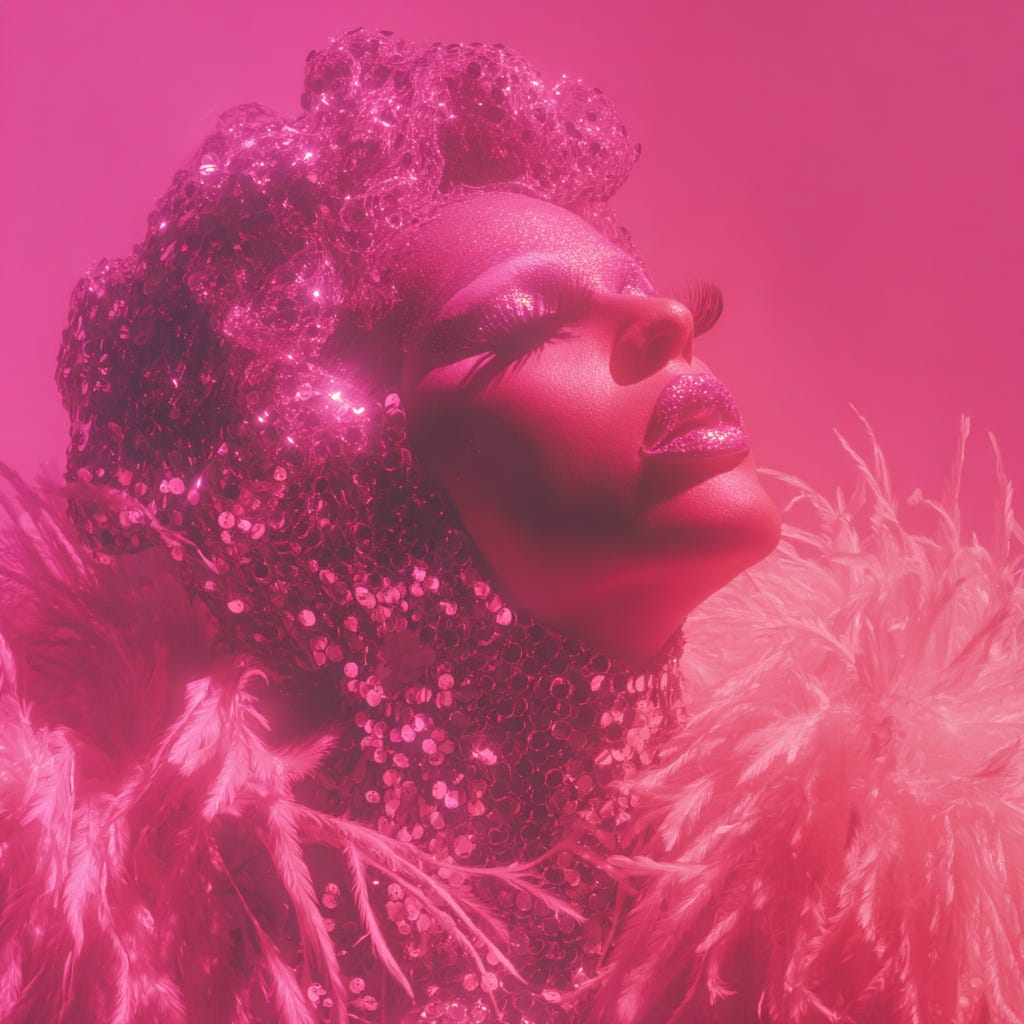
This was one of the first images where I thought, “Oh. This is the vibe.” I was exploring what happens when you take queer imagery and ask AI to iterate on it. What does a universe look like when it’s not trying to be serious or scientific, when it’s allowed to be joyful and queer?
The sparkles and sequins and glitter aren’t just decoration. It’s defiance. It’s celebration. It’s saying: why should beauty be minimalist and muted when it could be luminous and loud?
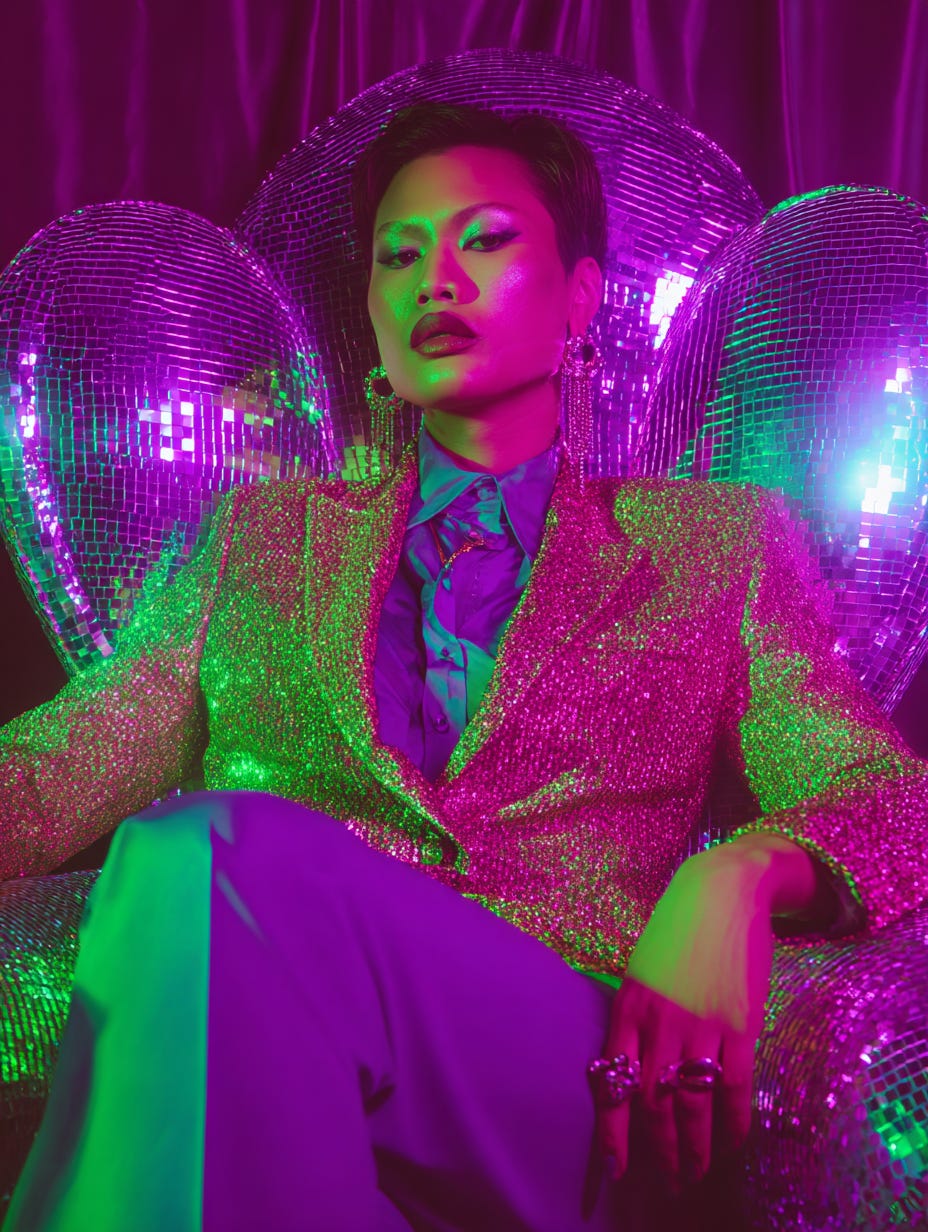
I wanted to create figures that felt both resonate to me - fabulous in their queerness and also defiant. Is there a disco ball chair out there in the world? Probably, but I was able to imagine it with AI and I am in love with the results.
The colors here are deliberate: purple, pink and green and disco balls, the kind of palette that shows up in queer spaces and has always felt like home to me.
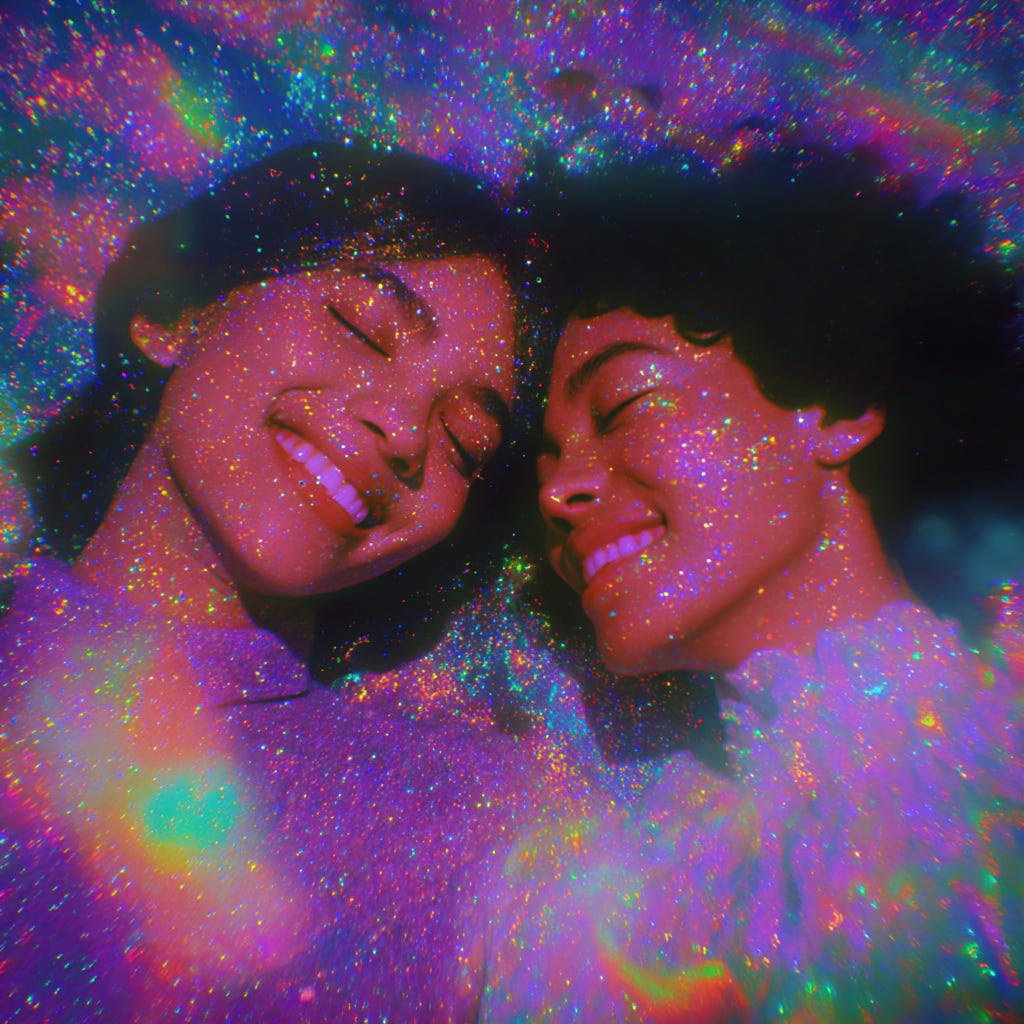
Sometimes I just want to create joy. Pure, uncomplicated, sparkly joy. This piece is what happens when you let yourself be maximalist without apology. More glitter. More color. More everything.
There’s something about excess that feels inherently queer to me—the refusal to tone it down, to make yourself palatable, to minimize. This image is the visual equivalent of refusing to whisper. I feel something when I look at this image, do I care that AI generated it, I do not because it was my idea behind it.
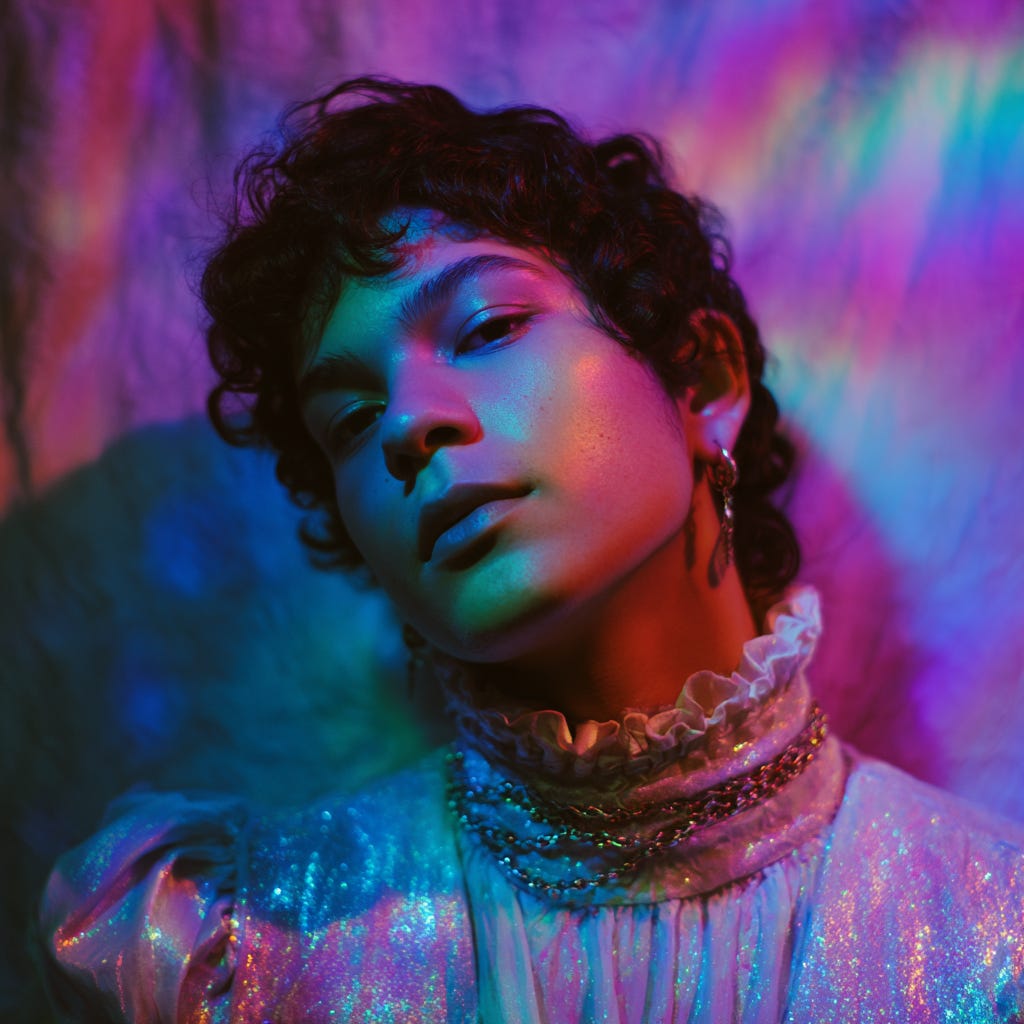
When I created this, I was thinking about visibility. Not the kind that’s about being seen by everyone, but the kind that’s about being truly visible to yourself. About seeing your own beauty reflected back at you in ways that feel true.
I never saw images like this growing up. Queer. Sparkly. Unabashedly fabulous. Creating them now feels like giving something to my younger self—and to anyone else who’s been looking for themselves in the world and not finding it. I’ve focused on documenting this in my photography career and now I get to make these folks with AI.
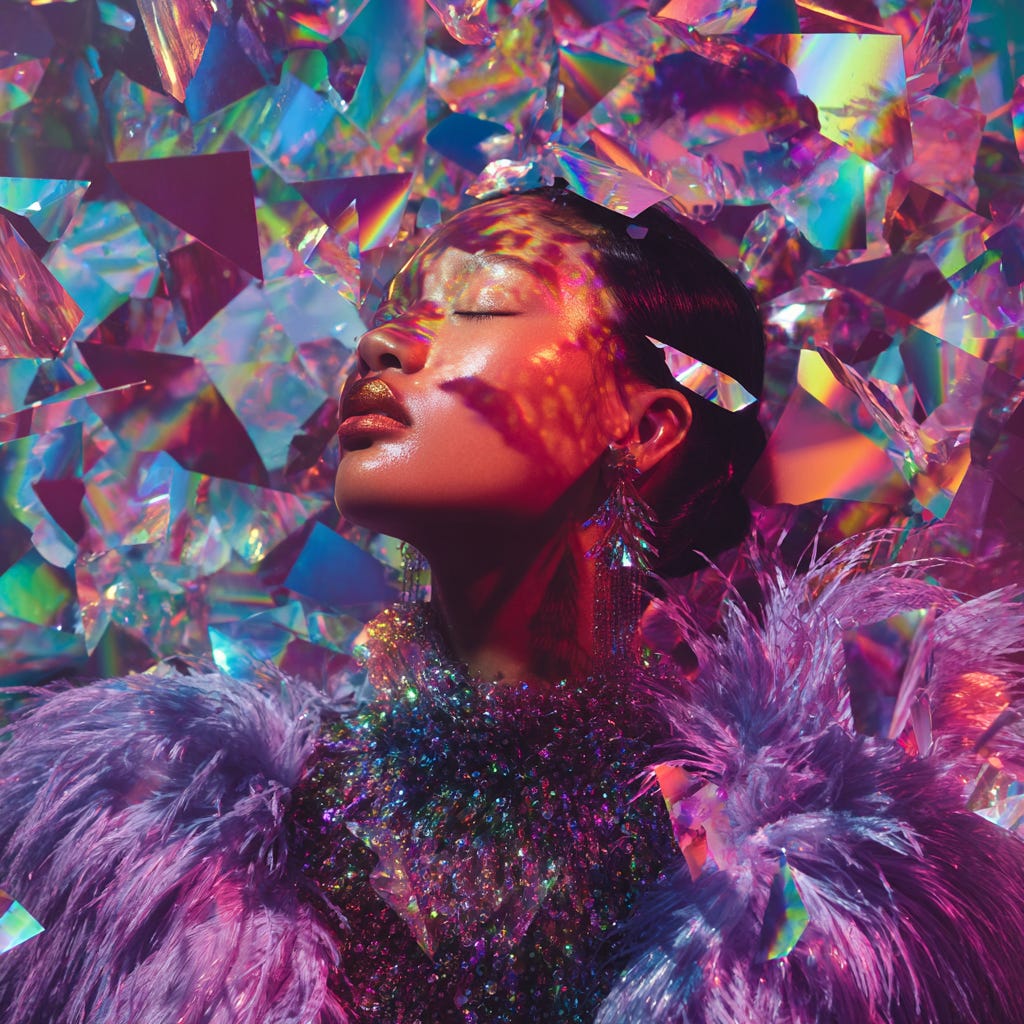
This one is pure fantasy. I wanted to build a world that doesn’t exist yet—or maybe that exists only in queer spaces, in drag shows, in moments when we’re allowed to be our most exuberant selves. A world where the default aesthetic is magical and excessive and celebratory. Look at these awesome fractals reflecting light!
AI lets me visualize that world. It lets me build the backdrop for the kind of story I want to tell, the kind of reality I want to inhabit.
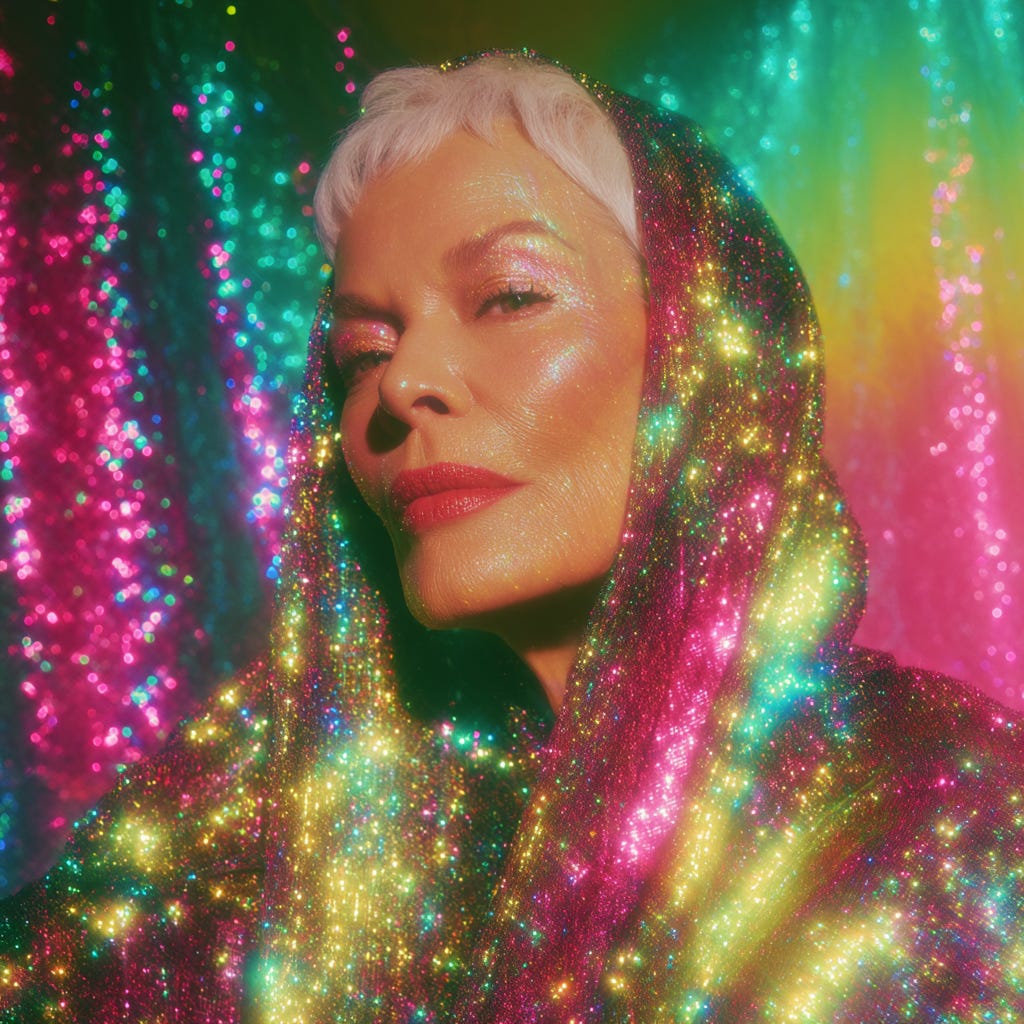
This is one of my most recent generations. I was thinking about queerness and aging (it is my birthday next week BTW) and it feels like all the threads coming together: the fabulousness, the queer, the theatrical, the sincere. It’s camp without irony. It’s beautiful without apology.
Creating this felt like finding my voice. Or maybe like allowing myself to use the voice I’ve had all along.
Why I’m Sharing Now
There’s a parallel here to coming out that I can’t ignore.
When you come out, you’re saying: “This is me. This is my truth. Take it or leave it.” You’re making yourself vulnerable, knowing some people won’t understand or won’t approve. But you do it anyway because living in hiding is worse than the risk of rejection.
Sharing creative work you really love - work that feels personal and true and maybe a little too much - is the same kind of leap.
I’ve done this before. When I became a photographer, I had to silence the voices that said I wasn’t good enough, wasn’t trained enough, didn’t have the right background. I had to post work I loved and trust that the right people would find it.
And they did.
So here I am again, doing the same thing in a new medium. Sharing the sparkly, queer, AI-generated worlds that make my heart sing. Putting them out into the world even though they might be too much for some people, too weird for others, not “real art” according to certain gatekeepers.
This is me. This is my vision. Take it or leave it.
What I Learned This Week
Hiding your best work doesn’t protect you from criticism - it protects you from connection.
Every piece of art that resonates with someone is a piece that almost didn’t get shared. Every creative community is built on people who decided to be vulnerable enough to show what they really love making.
The sparkly queer worlds I’ve been hiding? They were never going to find their audience in my closed folders. They were never going to inspire anyone, connect with anyone, mean something to anyone.
The only thing hiding accomplished was keeping me small.
So I’m done with that.
Your Turn
If you’ve been sitting on work you love—whether it’s AI art, photography, writing, music, anything—this is your sign.
Share it. Post it. Put it out there. The people who don’t get it were never your audience anyway. The people who do get it? They’re waiting for you.
Which of these images resonates with you most? What work have you been hiding? Tell me in the comments. Let’s be brave together.
PS: If you’re creating with AI and feeling weird about sharing it—you’re not alone. More on that in next week’s post about what photographers know about AI that technologists don’t.